
NW London Moving Guide for Flats and Houses
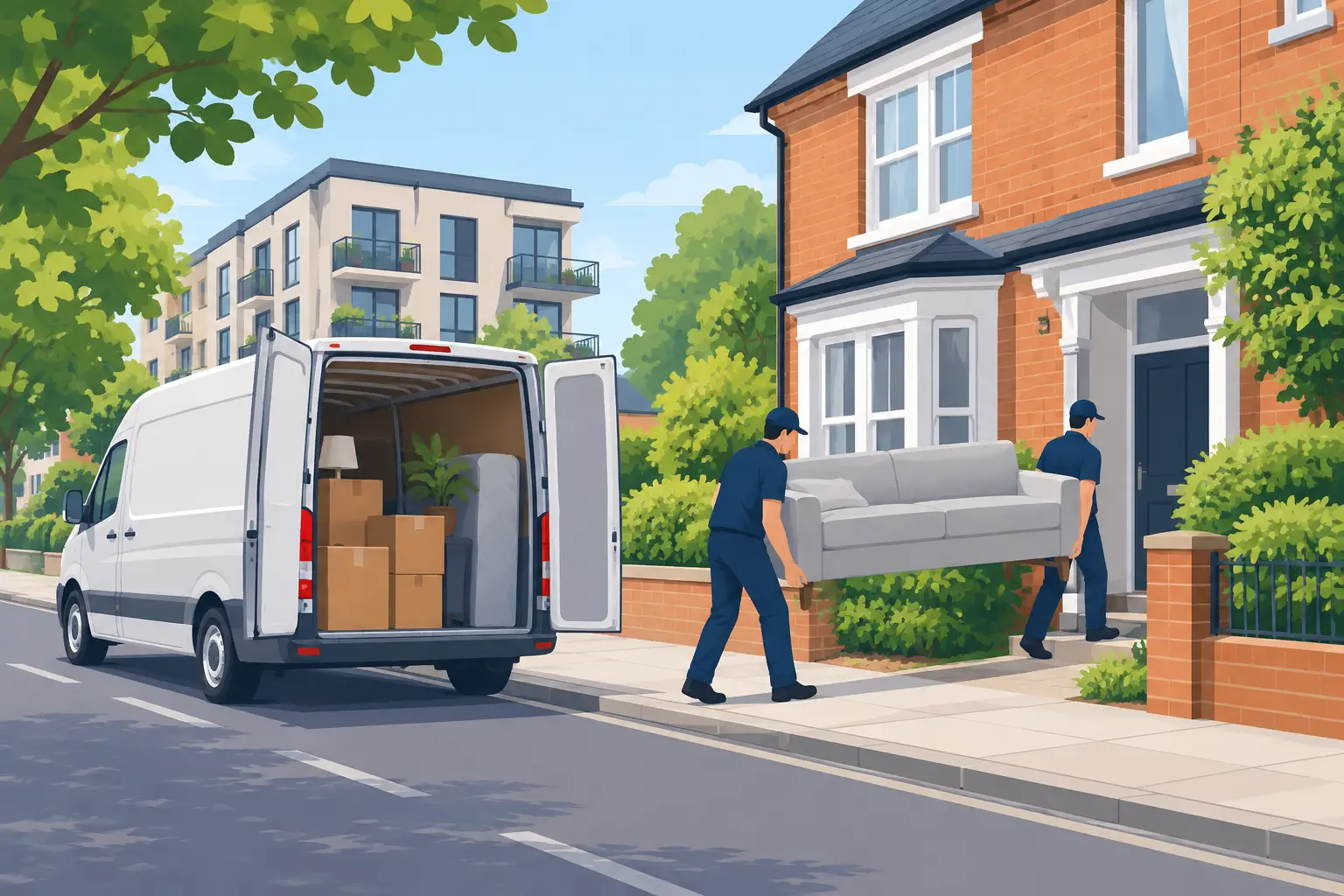
A move in NW London is rarely held up by the boxes. It is usually access that decides whether the day runs calmly: a controlled parking zone outside a Camden flat, a narrow terraced street in Cricklewood, a no-lift building in Finchley, or keys that arrive later than expected. This NW London moving guide focuses on the practical details a removals crew needs before loading starts.
The aim is not to make every part of moving perfect. It is to remove avoidable uncertainty, so the crew can arrive, dismantle, load, drive, unload and reassemble with a clear plan.
Start with the two addresses, not the inventory
Before counting boxes, look at how a van and crew can work at both properties. Tell your removals team the full postcodes, the floor at each address, whether there is a working lift, and how far the walk is from the vehicle to the front door. A ground-floor flat can still involve a long carry through a courtyard. A third-floor flat may be straightforward if there is a large lift and proper loading space.
In areas such as Hampstead, Kilburn and Barnet, access can change from one street to the next. Some homes have steep paths, tight entrances or flights of internal stairs. In Wembley and Harrow, newer blocks may have loading bays or concierge arrangements, but these often need to be booked in advance. Share any building instructions early, including entry codes, lift bookings and check-in procedures.
Photos can help where access is unusual. A picture of a narrow staircase, a low garage entrance or the route from the parking space to the property gives the crew a better idea of what to prepare for. It is particularly useful for large wardrobes, corner sofas, American fridge freezers and items that may need dismantling before they can be moved safely.
Plan parking before move day
Parking is one of the biggest moving-day variables in NW London. A removals vehicle needs somewhere safe and reasonably close to load and unload. If the crew has to park around the corner or move the van repeatedly, carrying time increases and the job becomes harder to manage.
The customer will usually need to arrange parking, a suspension or permission to use a loading area where required. Check the official council website for the rules that apply to your street, and let the removals team know what has been arranged. Do this for both addresses, even if one is outside London.
Be clear about anything that could affect the vehicle. Mention controlled parking zones, no-stopping restrictions, timed access, private estate rules, height barriers and garage limits. Do not assume a driveway works for a removals van without checking its width, slope and clearance. On narrow streets, a sensible loading plan may be more useful than trying to park directly outside a door where it blocks access for everyone else.
If you are moving from a block, ask the building manager or concierge where removals vehicles should wait and whether floor protection is expected. This avoids last-minute discussions at the entrance while the crew is ready to start.
Give an honest picture of what is moving
A useful inventory is not a perfect spreadsheet. It is a clear account of the items that need handling, especially anything large, fragile or difficult to take apart. Include beds, wardrobes, desks, dining tables, mirrors, TVs, washing machines and bulky furniture. Mention items stored in lofts, sheds, balconies or communal storage spaces too.
This lets the team plan the right number of loaders. Crews can range from one to four loaders depending on the items and access. An American fridge freezer will usually need three people, and its doors may need to come off. A piano can be moved with advance notice, so suitable specialist equipment can be prepared.
Do not leave furniture assembly until the end of the conversation. If a bed frame, wardrobe or table needs dismantling and reassembly, say so when arranging the move. The same applies to light handyman work, such as connecting a washing machine, hanging items or filling wall holes. These details affect the order of the work and make the move more straightforward once you reach the new property.
Pack for handling, not just for storage
Boxes should be closed properly, labelled by room and kept to a weight one person can sensibly lift. A box marked “kitchen” is helpful. “Kitchen - everyday items” is better, because it tells you what to open first after the move. Keep essential documents, medication, chargers, keys and valuables with you rather than in the main load.
For furniture and larger household items, protective handling matters as much as packing. Mattresses can be covered, and furniture can be protected with blankets and secured with straps during transport. Bubble wrap and mattress covers are included, while shrink wrap is charged separately according to the rolls used. Tell the team about delicate items in advance so they can be handled and positioned carefully.
It is worth separating items that are not going with you before the crew arrives. A packed hallway, donation bags mixed with removal boxes, or furniture due to stay behind can slow loading and create confusion. Leave clear instructions on anything that must not be loaded.
Build some flexibility around keys and handovers
Late key handovers are a common reason a move takes longer than planned. Your crew can load the old property efficiently, but unloading depends on being able to get into the new one. If you expect a delay, let the team know as soon as you hear about it.
There is a trade-off here. Booking a move too tightly around an uncertain key time may make the day feel more stressful. Where possible, allow room for the handover, collection arrangements and building access. If your move date is not confirmed yet, you can still discuss the likely inventory, addresses and access requirements so the main plan is ready.
For rented flats, take a final look through cupboards, balconies, sheds and utility areas before the team leaves. It is easier to spot a forgotten shelf, set of keys or bag of cleaning items while the property is still accessible than after the van has departed.
Moving into a flat with stairs or a small lift
No-lift flats are common across NW London, and they need a realistic approach. Stairs do not make a move impossible, but they affect how furniture is carried, when the crew takes breaks, and which pieces are dismantled first. Clear stairs and landings before the team arrives, removing shoe racks, plants and loose bags where possible.
Small lifts need similar preparation. Check whether there are size or booking restrictions and whether the lift can carry bulky furniture once it is protected. Sometimes smaller items can travel by lift while larger pieces go by stairs. The best approach depends on the building layout and the item itself.
Let neighbours or building staff know there will be a move if access is shared. This is simply courteous and can reduce surprises around entrances, lifts and communal corridors.
A clear move plan makes short-notice moves easier
A short-notice move does not need to mean an unclear move. The key information remains the same: collection and delivery postcodes, property access, parking, a straightforward inventory, and any dismantling or special items. Start with these details on the phone or WhatsApp, then confirm what needs to happen at each address.
Mooveto can help turn that information into a practical crew-led plan, with fully insured transport and careful loading rather than a vague van booking. The goal is simple: your belongings are wrapped, boxed, strapped down and handled as you would want your own possessions handled.
Before move day, keep your phone nearby, make sure both addresses can be accessed, and have the parking plan ready. Then request a free quote with your postcodes, move details and any access concerns, so the right plan can be put in place.