
Moving House in Winter London Without Delays
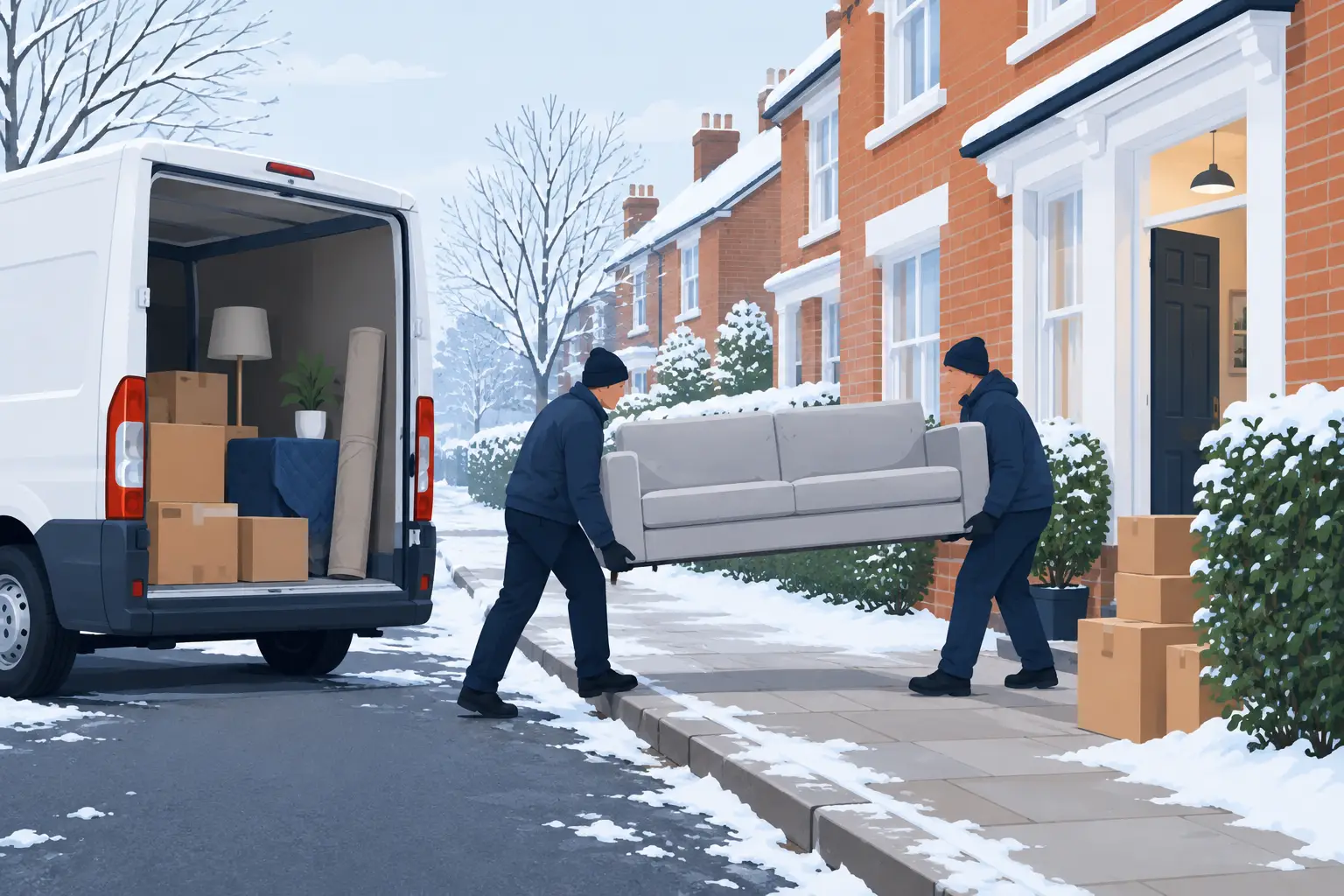
A winter move can start well and still become difficult by mid-afternoon. Moving house in winter London means working around rain on the pavement, early darkness, slippery entranceways and the usual pressure of collecting keys. The answer is not to wait for perfect weather. It is to plan the access, loading and handover properly, then use a crew that can protect your belongings while keeping the day moving.
Moving house in winter London starts with access
In London, the van’s stopping point often matters more than the weather. A dry day will not solve a difficult carry from a side street, a no-lift flat or a tight terraced road where there is little room to load safely. In winter, that distance becomes more noticeable when paths are wet and daylight is limited.
Arrange parking as early as possible and tell your removals team where the van can stop at both properties. This is especially useful in Controlled Parking Zones, on busy high streets and around blocks with loading restrictions. Check the official council website for the relevant parking suspension, permit and loading information, as requirements can differ between boroughs and streets.
Give clear access details when you request your quote. Mention stairs, lifts, narrow hallways, internal courtyards, concierge access, gate codes and garage height limits. A garage that looks convenient may not suit every vehicle, and a crew needs to know before arriving rather than finding out with a loaded van outside.
For flats in Camden, Hampstead, Kilburn or Finchley, it also helps to confirm whether the lift is working and whether building management has set moving times. A lift out of action does not make a move impossible, but it changes the handling plan and may mean more careful carrying on wet stairs.
Protect the route before the first box leaves
Rain does not usually damage a move when it is managed properly. Problems arise when wet shoes, open doors and unprotected items create a rushed route between property and van. Before loading begins, clear the hallway, entrance and path of loose mats, bags and anything that could become a trip hazard.
A careful crew will use blankets, straps and protective covers where needed, keeping furniture secure in transit rather than simply filling the van quickly. Mattress covers and bubble wrap are included, and floor protection can be requested for vulnerable surfaces. This is particularly worthwhile in rented flats, communal corridors and newly decorated homes, where mud and moisture are an unnecessary extra job at the end of the day.
Keep outdoor-facing doors shut whenever they are not in use. It preserves warmth and reduces the amount of rain coming into the property. If a route is exposed, move the most weather-sensitive pieces first, including upholstered furniture, electronics and boxed paperwork. The aim is steady handling, not a frantic dash through the rain.
Pack for damp weather and dark evenings
Cardboard is reliable when it is dry, but it weakens quickly when left on a wet pavement. Pack boxes fully enough that they stack securely, tape the bottoms well and keep them inside until the crew is ready to load. Avoid leaving labelled boxes outside while you deal with keys or paperwork.
Use sealed bags or lidded containers for items that should not get damp, such as documents, cables, small electronics and bedding. Keep essential items with you: keys, medication, chargers, ID, tenancy or purchase papers, and anything you will need on the first evening. A separate essentials bag prevents a late search through dozens of boxes when light is fading.
Winter is also a good reason to label by room and priority, not just by contents. Mark the boxes you need first at the new property, such as bedding, kettle items, toiletries and children’s essentials. This lets the crew place them where they are useful, rather than leaving every box in one room to sort later.
Build the move around the key handover
Late key handovers are one of the most common reasons a move slows down. They can leave a loaded crew waiting outside a new property as daylight disappears and parking time becomes tighter. You cannot always control the handover, but you can make a plan for it.
Confirm who is collecting the keys, how they will contact you and when you will update the removals team. Keep your phone charged and answer calls promptly on the day. If keys are delayed, tell the crew as soon as you know. Early information gives everyone more options than a last-minute call from outside the new address.
Where possible, avoid packing your key items into the van. Keep the new keys, parking details and entry instructions together in a bag that stays with you. At the property, check the route from the entrance to the rooms where large furniture needs to go. A quick walk-through can reveal a locked internal door, a narrow turn or a lift issue before the heaviest items are carried in.
Allow for furniture that needs dismantling
Beds, wardrobes, tables and other large pieces can be awkward at any time of year, but winter makes it even more helpful to have a clear plan. Trying to force furniture through a narrow hall in poor light risks damage to both the item and the property. Dismantling and reassembly can make the route safer and loading more secure.
Tell the team in advance which items need to come apart and whether you have any particularly large appliances or furniture. American fridge freezers usually need three people and may require the doors to be removed. Pianos can also be moved with advance notice, so the right specialist equipment is ready.
Mooveto can handle light handyman work as part of the move, including assembling and dismantling furniture, connecting a washing machine, hanging items and filling wall holes. It is still worth discussing the details before move day, especially when access is tight or the job needs to happen after dark.
Keep the crew informed when conditions change
Winter weather can change quickly. A dry morning may turn into heavy rain just as loading starts, and a cold evening can make exterior steps less comfortable to use. The crew will adapt the handling approach, but they need accurate information from you.
Let them know if the property has an exposed path, a steep drive, loose paving or a shared entrance where neighbours need access. If there is no safe place to stop close by, say so during planning. The right number of loaders depends on the items and the route, with crews available from one to four loaders. More people are not always necessary, but enough hands for the access and heavier pieces can prevent avoidable delays.
Do not rush the final loading check because the weather is poor. Furniture should be wrapped, boxed items stacked sensibly and loads strapped down before the van leaves. That care matters on wet roads and through stop-start London traffic just as much as it does at the doorstep.
A calmer way to finish a winter move
Once the van arrives, direct the crew room by room before boxes begin to come in. Put beds and essential furniture first if possible, then make sure boxes are placed where they are labelled. You do not need to unpack everything that evening, but having a working bed, light, kettle and clear route through the home makes the first night far easier.
Winter moves reward preparation rather than optimism. Share the postcodes, access details, parking plan, furniture list and likely key timing early, and your removals team can arrive ready to dismantle, load, drive, unload and reassemble with care. When you are ready to plan your move, request a free quote.