
London Piano Removals Need an Access Plan
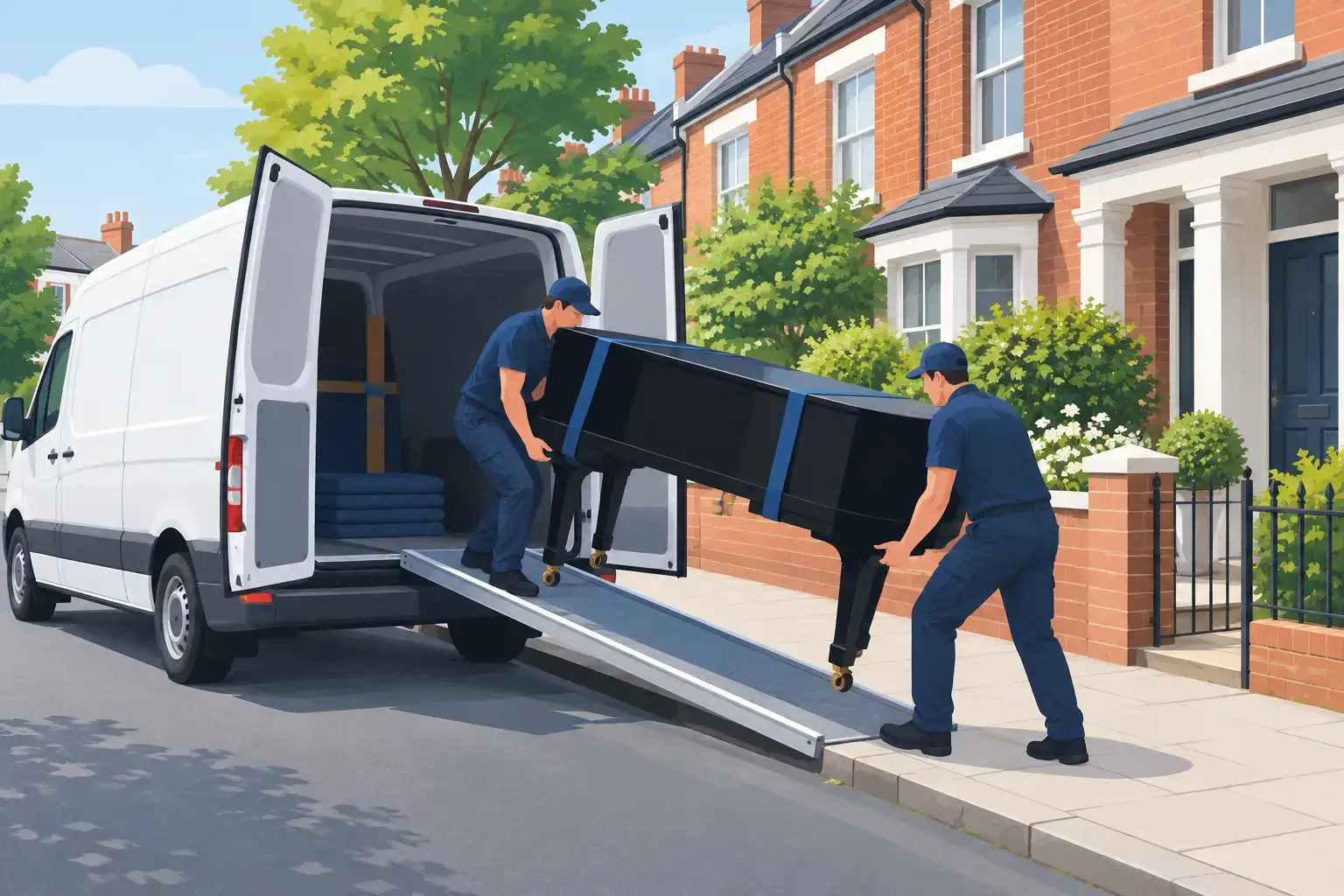
A piano can be the item that changes the whole shape of a move. In a London flat, the challenge is rarely just getting it from one room to another. It is the narrow hallway, the turn on the stairs, the no-lift building, the parked cars outside and the distance from the entrance to the van. That is why London piano removals need an access plan before move day, not a last-minute decision on the pavement.
With the right information early, a removals crew can arrive prepared, protect the route, load carefully and keep the rest of your home move moving. Without it, a piano can hold up collection, delay other furniture and create unnecessary stress when you are already waiting for keys or managing a tight handover.
London piano removals begin with the route
Before booking a piano move, look at the journey the piano must take from its current position to the vehicle. This is not about measuring every inch perfectly. It is about spotting the parts of the route that need planning.
Start inside the property. Is the piano on the ground floor, up a flight of stairs or in a basement? Does the route include a narrow corridor, a sharp turn, a communal entrance or a lift? In older London conversions and terraced homes, the tightest point is often not the front door. It may be the stairwell, a landing or the turn from the living room into the hall.
Then consider the outside access. In Camden, Hampstead, Kilburn, Finchley and similar busy areas, the van may not be able to wait directly outside for long. A piano should not be carried further than necessary simply because parking was left until the morning of the move. Tell the removals team about the nearest possible loading point, any gated access and whether the route crosses steps, a garden path or a shared hallway.
Photos and a short video of the route can be useful when arranging your move. They help the team understand the access in practical terms, rather than relying on a description such as “a few stairs”.
What to tell your removals crew in advance
Pianos can be moved with advance notice, allowing the right equipment to be ready. The more clearly you describe the piano and property, the more confidently the move can be planned.
When requesting a free quote, include the following details:
- the type of piano, such as upright, baby grand, grand or digital piano
- where it is positioned now and where it needs to go
- the number of floors, stairs, lifts and any difficult turns
- clear photos of the piano, entrances, stairs and outside loading area
- the collection and delivery postcodes, including any known access restrictions
- your preferred move date, even if your completion or key handover time is not yet confirmed
It also helps to mention whether the piano is part of a full house move or needs moving on its own. A piano collected alongside furniture, boxes and appliances needs to be scheduled into the loading order. If it is an individual-item move, the crew can focus on the collection route and safe transport without managing a whole property at the same time.
There is no benefit in downplaying a difficult staircase or awkward access. A careful removals service would rather know early and bring the right level of support than discover a problem once the van is loaded.
Upright and grand pianos need different planning
An upright piano may take up less floor space than a grand, but that does not automatically make it straightforward to move. Its weight is concentrated, and it still needs a clear, protected route through the property.
A grand or baby grand piano may require more discussion before the move because its shape, size and route can affect how the crew prepares. Give advance notice rather than assuming it can be handled like a standard cabinet or table. The same applies if the piano is in a top-floor flat, basement room or building with a particularly tight communal staircase.
The sensible approach is not to guess what will work. Share the details, let the team assess the route and agree a realistic plan before the booking is confirmed.
Parking matters more than most people expect
London parking is often the part of a piano move that causes the most avoidable delay. The customer will usually need to arrange parking, so raise this as early as possible, particularly where there are Controlled Parking Zones, no-stopping restrictions, loading limits or narrow terraced streets.
Check the official council website for your borough's current parking, suspension and loading arrangements. If a suspension or permit may be needed, leave enough time to make the necessary arrangements. Do not assume that a removal van can stop wherever a car can stop, or that a space outside the building will remain free on move day.
If you are moving from a block of flats, ask the building manager or concierge about access too. Some properties have designated loading areas, timed access or height limits at garage entrances. A van that cannot enter an underground garage may need to load from the street, which changes the distance the crew must cover.
At the destination, repeat the same checks. A perfect collection can still become difficult if there is nowhere suitable to unload at the new address.
Prepare the room without trying to move the piano yourself
You do not need to start shifting the piano before the crew arrives. In fact, trying to drag or tilt it to “make it easier” can create a problem before the move has begun.
What you can do is clear the route. Move small furniture, rugs, plants, lamps and boxes away from the path between the piano and the exit. Open internal doors where possible and make sure children and pets can be kept away from the working area. If the piano has items stored on top, remove them beforehand so nothing falls during handling.
Tell the crew if you are concerned about a particular floor, wall, doorway or stair rail. Practical protective measures can be planned around the property, including blankets, straps and floor protection on request. The aim is to handle the piano with the same care given to the rest of your belongings, while keeping the route safe and workable for the team.
If furniture needs dismantling to clear access, raise that during planning. A removal crew can dismantle and reassemble suitable items as part of the move, but it is better to agree this in advance than add it when the team arrives.
Build the piano into the move-day order
For a full home move, the piano should not be treated as an afterthought. It needs to be part of the loading plan from the start.
The crew will generally work through the property in an order that keeps access clear and protects larger items. This can mean loading selected furniture and boxes first, or keeping a route open until the piano has been brought out. The best order depends on the layout of the home, the loading point and what else is being moved.
Try not to fill the hall, landing or entrance with sealed boxes before the crew arrives. Those areas are working routes, especially in no-lift flats where everything must travel down the same staircase. Keeping them clear gives the team room to carry safely and reduces the chance of repeated handling.
Key handovers are another point to plan around. Delays often come from keys being released later than expected, leaving the crew unable to start unloading. If your moving time depends on an estate agent, landlord, concierge or seller, keep the removals team updated. Clear communication lets the day be adjusted sensibly rather than leaving everyone waiting without a plan.
When a piano move needs more discussion
Some situations simply need a proper conversation before a booking is made. This includes properties with several flights of stairs, exceptionally narrow access, basement entrances, long carries from the road, restricted loading times and moves involving a grand piano.
It does not mean the move cannot go ahead. It means the crew needs to understand the practical conditions and plan the right people and equipment. Mooveto can provide from one to four loaders depending on the items and access, so sharing accurate details helps match the crew to the work involved.
A piano is often one of the most valued possessions in a home. Treat its removal as a planned part of the move, not a problem to solve on the day. Send the piano details, route photos, postcodes and parking information, then request a free quote and agree the move plan before the van arrives.