
How to Move a Wardrobe That Does Not Fit Through the Door
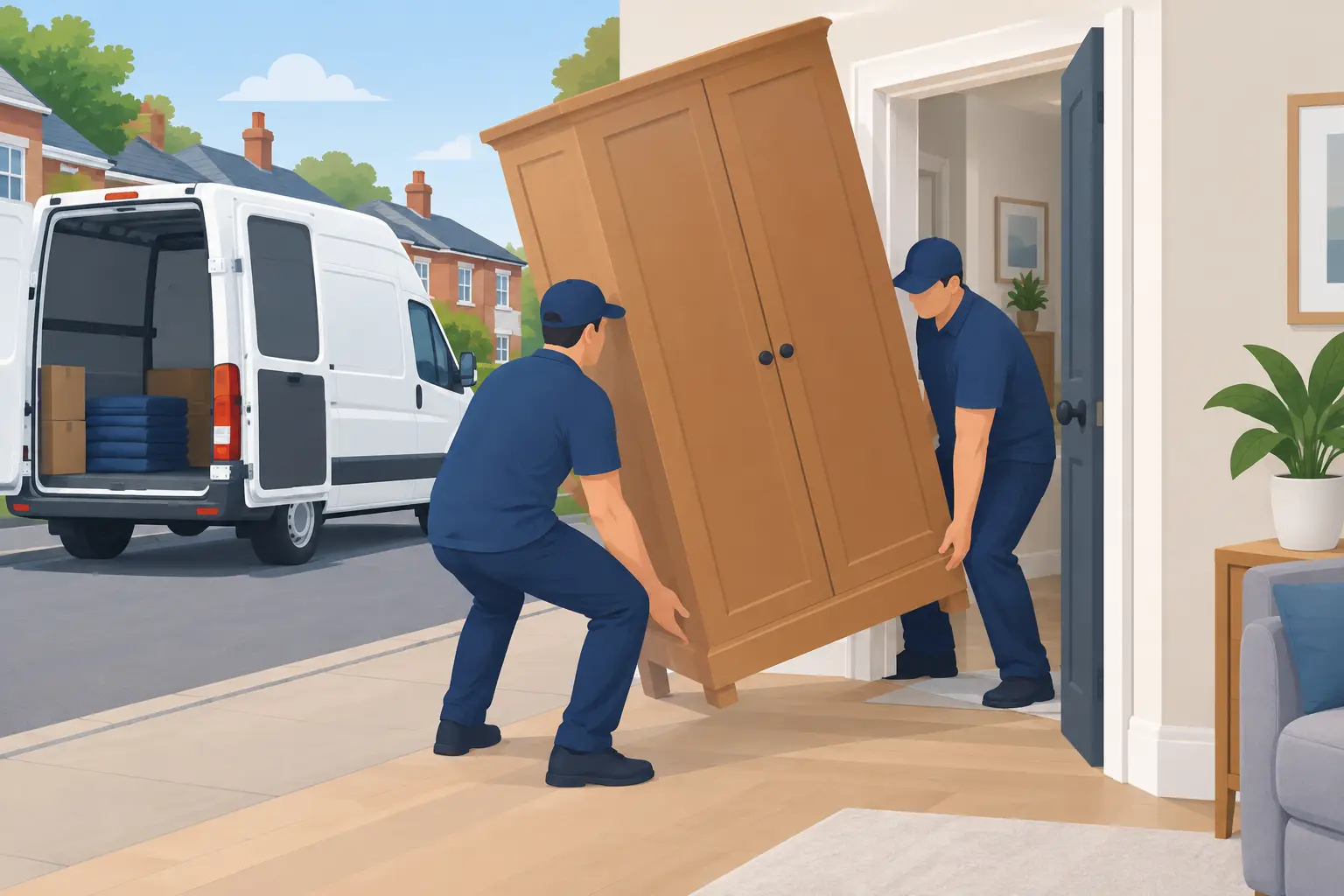
A wardrobe can look manageable until it reaches the bedroom doorway and stops completely. If you are working out how to move a wardrobe that does not fit through the door, the answer is rarely to push harder. The safe route is to assess the access, measure the real pinch points, and decide whether the furniture, the door or the moving route needs to change.
This matters in London flats and older houses, where doorways can be narrow, landings tight and stair turns unforgiving. A wardrobe that clears a room door may still be too long to rotate on the landing, or too deep to pass through a communal hallway without catching walls, handrails or light fittings.
Start by checking what is actually preventing the move
Before anything is lifted, empty the wardrobe completely. Remove clothes, drawers, shelves, hanging rails and any loose mirrors. This reduces the weight, prevents damage inside the unit and gives a clearer view of how the wardrobe is constructed.
Then measure the wardrobe at its widest, tallest and deepest points. Measure the door opening too, but do not stop there. The usable opening is often smaller than expected because of the frame, skirting, handles and the angle needed to turn the item through.
A removals crew will also check the full route: the bedroom door, corridor, lift entrance, stairwell, front door and route to the vehicle. In a no-lift flat, the critical point is often the stair turn rather than the doorway itself. In a terraced property, it may be the narrow hall or a bend beside the stairs.
The key question is whether the wardrobe can pass through on a different angle. A tall, slim wardrobe may clear a doorway when tilted carefully, while a deep wardrobe with a fixed top may not have enough room to rotate. This is not something to guess with a heavy item in your hands. A wrong lift can damage the wardrobe, walls or flooring, and can put the people carrying it at risk.
How to move a wardrobe that does not fit through the door
Once the measurements are clear, there are usually three practical options: dismantle the wardrobe, temporarily remove an internal door if that genuinely creates the clearance needed, or use a different route. Which option is right depends on the wardrobe’s construction and the access at both addresses.
Dismantle it if it was designed to come apart
Most modern flat-pack wardrobes can be dismantled into panels. A crew will normally remove the doors first, then drawers and internal fittings, before taking apart the frame in a controlled order. Screws, brackets and fittings should be kept together and clearly separated from unrelated hardware.
The back panel deserves particular care. It can be thin and easily damaged if it is bent or pulled away too quickly. Large panels should be wrapped and carried upright where possible, with corners protected. Doors and mirrors also need separate protection, rather than being stacked loosely against other furniture.
Dismantling is usually the most reliable solution when a wardrobe must travel up or down stairs, through a tight doorway or into a different room at the new property. It also makes the item safer to load, strap down and transport. At the other end, the wardrobe can be reassembled in the room where it will stay, avoiding a repeat of the same access problem.
That said, not every wardrobe should be dismantled. Older solid-wood furniture, glued cabinets and wardrobes with weakened joints can be harder to take apart without causing damage. Some units are technically assembled with screws but may have swollen chipboard, worn fittings or previous repairs that make reassembly less predictable. In these cases, the crew should assess the item before committing to disassembly.
Consider removing the room door, not the door frame
Sometimes the wardrobe misses the opening by a small amount. Removing an internal door from its hinges can provide useful extra room, especially where the open door itself limits the turning space. It is a practical option only when the frame remains wide enough and the door can be removed and rehung safely.
Taking out a door is not a fix for a wardrobe that is substantially too large. The door frame, skirting, walls and turning angle still set the limit. Forcing the unit through can chip the frame, tear hinges from the door or damage the wardrobe corners.
A careful crew protects the surrounding area before moving the item. Blankets, floor protection and controlled lifting make a difference in narrow halls, particularly where there are painted walls, wood flooring or shared communal areas.
Use another route only if it is genuinely safer
A different route may be possible through a wider reception room, a second entrance or a lift with better access. It depends entirely on the layout. Carrying a wardrobe farther is not automatically a better option if it means more tight turns, uneven ground or crowded communal spaces.
External access can create its own challenges. In London, a vehicle may need to load on a narrow street, within a Controlled Parking Zone or near restrictions that affect where the crew can stop. Arrange parking as early as possible and tell the removals team about no-stopping markings, access gates, height limits and any building loading rules. Check the official council website if you need to confirm permits or suspensions for your street.
Protect the wardrobe before it leaves the room
A wardrobe is vulnerable at its corners, doors and base. Once dismantled, each panel should be wrapped or blanketed before it is carried out. If it is moving as one piece, doors should be secured so they cannot swing open, and removable drawers should come out rather than being taped shut and left to slide around.
Avoid dragging the unit. Dragging can damage flooring, strain the base of the wardrobe and leave the carriers without proper control. It is also worth clearing the route in advance: move shoes, small furniture, pictures and loose cables out of the way. In a compact flat, this small preparation gives the crew space to turn and carry safely.
For transport, the wardrobe or its panels should be loaded securely, separated from hard-edged items and strapped down so nothing shifts during the journey. Mattresses, tables and other large furniture should not be allowed to press against unprotected wardrobe doors or mirrors.
Tell your removals team before moving day
A wardrobe that will not fit through a door is not an unusual problem, but it needs to be included in the move plan. Send clear photos of the wardrobe, the doorway, the stairs and any tight turns when requesting your quote. Mention whether it is flat-pack, solid wood, mirrored, particularly tall or already damaged.
Also explain the access at both properties. Details such as a fourth-floor flat with no lift, a narrow stairwell in a converted house, a shared entrance or limited parking help the team arrive with the right number of loaders and the right plan. Crews can range from one to four loaders depending on the items and access, so this information affects how the move is organised.
If there is any doubt about whether the wardrobe can be reassembled in the new room, measure that room and its doorway before the move. It is far easier to decide where it belongs while the unit is still in panels than after it has been rebuilt in the wrong place.
Mooveto can assess the access, dismantle and protect suitable wardrobes, load them securely, then reassemble them where they need to be. The aim is straightforward: no forcing, no guesswork and no leaving you with a wardrobe stranded in a hallway.
Take a few measurements, photograph the route and share the details early. For a clear plan for your wardrobe and the rest of your move, request a free quote.
Moving in NW London? See our removals pages for Cricklewood, Kilburn and Wembley.
← All articles