
How to Dismantle Moving Furniture Safely
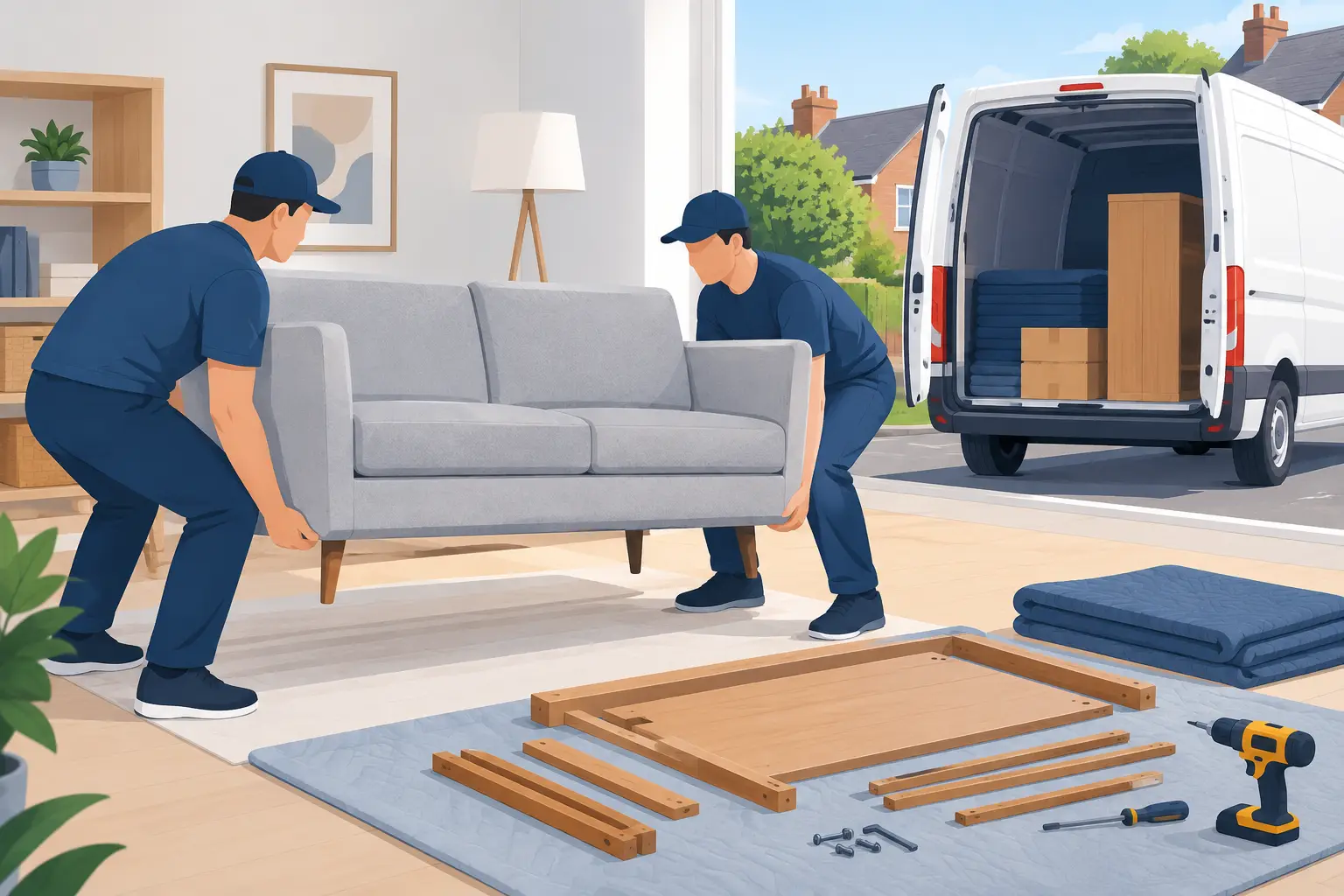
A bed frame that will not turn on a Camden stairwell, or a wardrobe blocking the doorway of a no-lift flat, can slow a move before the van is loaded. Knowing how to dismantle moving furniture properly means deciding what needs to come apart, keeping every fitting together and protecting the pieces that are most likely to be marked in transit.
For many London moves, dismantling is less about making furniture small and more about making access possible. Narrow terraced entrances, Controlled Parking Zones, tight hallways and several flights of stairs all change the plan. The aim is not to take everything apart. It is to remove only what makes the furniture safer to carry, load and reassemble.
Decide what genuinely needs dismantling
Start by measuring the tightest points of the move: the flat entrance, internal doors, stair turns, lift opening and the route from the building to the loading point. A table may fit through a doorway with its legs removed, while a chest of drawers may travel more securely intact with its drawers secured. It depends on its construction, weight and the access available.
Beds, wardrobes, large dining tables, desks and modular shelving are common candidates. Flat-pack furniture can often be dismantled, but repeated assembly can weaken worn chipboard fittings. If it is already loose or damaged, taking it fully apart may create more work at the new address. In that case, removing doors, shelves or legs may be the better choice.
A solid wood wardrobe is different from a lightweight flat-pack unit. The solid piece may need doors and internal shelves removed for safe handling, while the flat-pack wardrobe may need careful dismantling into panels. Do not force either option because it looks quicker. A damaged panel or stripped fixing costs more time than a few minutes spent planning the route.
How to dismantle moving furniture before the crew arrives
Clear the furniture first. Remove clothes from wardrobes, cables from desks and loose items from drawers. This reduces weight, stops contents shifting and gives you a clear view of the fittings. Emptying a unit also makes it easier to spot existing marks or weak areas before it is moved.
Take clear photographs before removing the first screw. Photograph the whole item, then close-ups of hinge positions, rail connections, brackets and any unusual fittings. These pictures are useful when a bed frame has several similar-looking rails or a wardrobe door needs to return to one specific side.
Keep the work area clear and lay a blanket, cardboard or clean sheet beneath the furniture where possible. Panels and tabletops can be scratched by grit on a floor or pavement far more easily than people expect. If the item is being dismantled in a communal hallway, avoid spreading parts across a route that neighbours need to use.
Keep fittings with the item
The most common reassembly problem is not a missing panel. It is a small bag of bolts that has been placed in a separate box and cannot be found at the new property. Put screws, cam locks, dowels, Allen keys and brackets into a labelled bag, then tape that bag securely to the largest corresponding panel or place it inside a labelled drawer.
Write the furniture name and room on the label, such as “main bedroom bed” or “study desk”. If several items use similar fittings, separate them rather than putting every screw into one container. A few extra labels prevent guesswork when the move is underway.
Work in reverse order of assembly
Most furniture comes apart safely by reversing the manufacturer’s assembly sequence. Remove shelves and drawers before doors, then take off smaller fittings before separating the main structure. For a bed, the mattress and slats come off first, followed by rails and headboard connections. For a table, remove the legs only after the top is supported.
Avoid pulling parts apart when they resist. Check for hidden screws under caps, locking cams, connecting bolts or glued joints. Furniture that has been painted over or assembled many years ago can be particularly stubborn. Forcing it can split a panel or bend the hardware that holds it together.
For larger pieces, have another person support the weight while fittings are removed. A wardrobe door, table top or bed rail can shift suddenly once the final fixing is released. The person with the tool should not also be trying to hold a heavy section in place.
Protect every panel for loading
Once dismantled, group panels by item and protect exposed corners. Long wardrobe sides, glass shelves and table tops should not be allowed to rub against one another in the van. Blankets, bubble wrap and secure strapping help keep pieces stable during loading and transport.
Pay special attention to glass, mirrors and glossy finishes. Remove detachable glass shelves where possible, wrap them separately and keep them upright rather than laying them under heavier items. If a mirror is fixed to a wardrobe door, tell the removals crew before lifting begins so it can be protected and loaded accordingly.
Mattresses also need protection once a bed is apart. A mattress cover keeps it clean while it passes through shared entrances, pavements and the loading area. Keep slats bundled together and label which bed they belong to, particularly if more than one room has the same style of frame.
Do not tape directly onto polished wood, veneer or painted surfaces. Tape can lift a finish or leave residue. Use wrapping around the surface instead, and secure it to itself where practical.
Plan dismantling around London access
Furniture dismantling should be part of the move plan, not a task started when the van is already waiting. In areas such as Hampstead, Kilburn, Finchley or Wembley, parking, steep steps and restricted loading space can affect the order in which items leave the property. Tell the crew in advance about stairs, lifts, narrow streets, parking arrangements and any height limits at a garage or undercroft.
Customers usually arrange parking, and it is worth checking the official council website early for any permits, suspensions or restrictions that may apply near the property. A convenient place to load reduces the distance heavy panels need to be carried and helps keep entrances clear.
If keys may be handed over late, let the team know. Delays at the new address can affect when furniture is reassembled, especially where access is limited. Keeping the fittings and assembly instructions easy to reach means the crew can get started as soon as the room is available.
When it is better to leave dismantling to the movers
Some items need more than a household screwdriver. Large wardrobes, adjustable beds, office desks with cable sections and furniture with heavy glass all benefit from experienced handling. American fridge freezers usually need three people and may require their doors to be removed, so this should be raised before moving day rather than treated as a last-minute job.
The same applies to furniture that is already damaged, unusually heavy or difficult to reach. A professional crew can assess whether a piece should travel whole, partly dismantled or in separate sections. Mooveto can arrive, dismantle, load, drive, unload and reassemble, with the plan based on the furniture and access at both addresses.
Leave specialist or uncertain work to the crew where possible. The goal is a usable home at the other end of the move, not a collection of panels that are difficult to identify after a long day.
Before booking, make a short list of the pieces that may need attention and send photographs if requested. Include the bed, wardrobes, tables, desks and any item that has tight access. Request a free quote, explain the collection and delivery details, and the move can be planned with the right crew and equipment from the start.