
A Guide to Narrow Street Removals in London
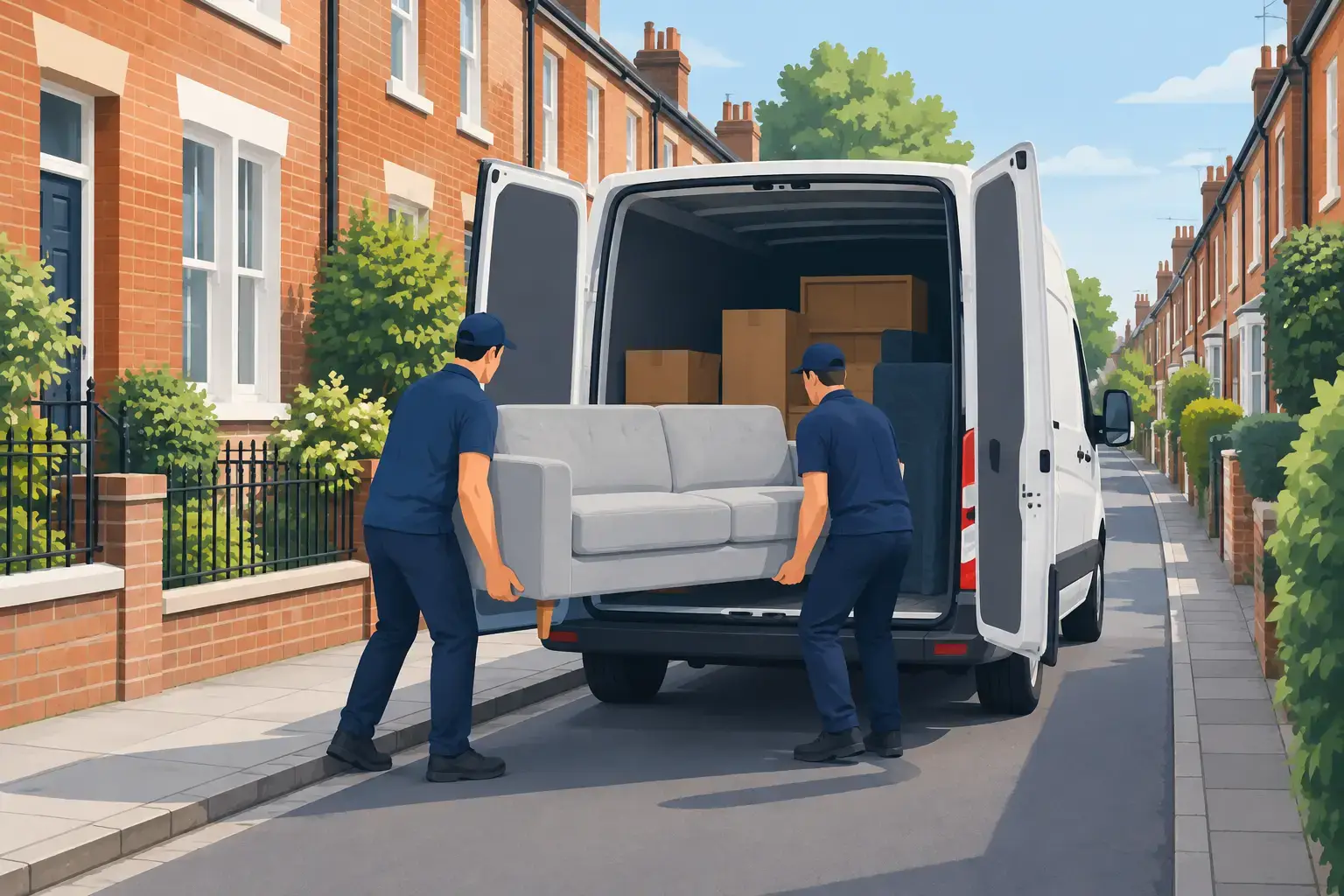
A removal van can be fully packed and a crew ready to work, yet a narrow terraced street can still hold up the whole move before the first box is lifted. This guide to narrow street removals explains what makes the difference: clear access information, sensible parking arrangements and a loading plan that protects both your belongings and the day’s schedule.
In London, particularly around Camden, Kilburn, Hampstead, Finchley and older parts of NW London, the challenge is rarely just the width of the road. It can be a tight turning point, parked cars on both sides, a Controlled Parking Zone, a no-lift flat above a shop, or a long walk from the nearest legal stopping place. These details are manageable when they are known early. They are much harder to solve with a loaded van waiting outside.
What makes narrow street removals different
On a wide road with straightforward parking, the crew can position the van close to the entrance and create a direct route from property to vehicle. On a narrow street, that route may involve a longer carry, more careful use of pavements and a stricter loading order. It does not mean the move cannot go ahead. It means the plan needs to fit the street rather than assume the street will fit the plan.
The biggest practical issue is usually how close the vehicle can get. A few extra metres may not sound significant, but it changes how quickly furniture and boxes can be moved, especially where there are stairs, heavy wardrobes or awkward communal entrances. A longer carry can also mean a larger crew is the better option. Crews can range from one to four loaders depending on what is being moved and the access at each address.
Vehicle access matters too. Narrow lanes, sharp corners, low branches, garage entrances and height restrictions can affect where a van can safely travel or wait. If there is a garage or archway involved, tell the removal team about the height limit before the booking is confirmed. Do not assume a vehicle can pass through because a car can.
Plan parking before removal day
For most London moves, the customer arranges parking. That is worth doing as soon as the move date is reasonably clear, particularly where a parking suspension or designated loading space may be needed. Check the official council website for the current process and requirements in your borough, as local arrangements can differ.
When you speak to your removals team, share the exact pickup and delivery postcodes, rather than only the area name. Then describe the road as it is on a normal weekday or weekend: whether cars usually line both sides, whether the building has a forecourt, and whether there is a place nearby where the van can wait if it cannot stop directly outside.
It also helps to flag the following information in one message:
- any parking bay, permit, suspension or loading arrangement you have requested;
- no-stopping restrictions or road markings near either entrance;
- low bridges, garage height limits, tight corners or gates;
- building access, including entry codes, concierge arrangements and lift availability;
- the likely walking distance between the vehicle and the front door.
Photographs can be useful where access is unusual. A clear image of the street, entrance and any narrow passage gives the crew a more realistic picture than a postcode alone. It can also prevent avoidable surprises such as steps hidden behind a side gate or a doorway that needs a large item turned upright before it can pass through.
A good loading plan starts inside the property
Narrow streets create pressure outside, so the inside of the property needs to be ready. Clear the route from each room to the front door before the crew arrives. Hallways are often the pinch point in London flats and terraced houses, particularly when shoes, bicycles, delivery boxes or dismantled furniture are left in the way.
Put aside the items that must travel with you, such as keys, documents, medication and chargers. Everything else should be available for loading or clearly marked as staying behind. This avoids a crew carrying items back out of the van after a last-minute change of mind, which is particularly inconvenient when the vehicle has limited time or space at the kerb.
Furniture should be assessed for the actual route, not just the room it is leaving. A bed frame may need dismantling to get down a narrow staircase. A wardrobe might need to come apart before it can turn through a tight landing. A careful removals crew can dismantle, load, drive, unload and reassemble furniture, but advance notice helps ensure the right tools, crew size and time are allowed for the job.
American fridge freezers are another item to mention early. They usually need three people to move safely and, in some properties, their doors may need to be removed to pass through. The same applies to pianos: they can be moved with advance notice so the appropriate specialist equipment is ready.
Protecting furniture when space is tight
A narrow street move is not an excuse to rush handling. In fact, the tighter the route, the more valuable preparation becomes. Mattresses can be covered, furniture can be wrapped and secured, and items can be loaded in an order that keeps them stable during transport. Blankets, straps and mattress covers help protect belongings while they are being carried and while the van is in motion. Bubble wrap is included, while shrink wrap is charged separately for the rolls used.
At the property, floor protection can be requested where it is useful, especially when repeated trips are needed from a rear room or upstairs flat. Corners, door frames and bannisters deserve attention too. The aim is not simply to get large items through a small space, but to get them through without scraping the item, the property or the communal areas.
There is a trade-off here. Parking farther away may sometimes be the only workable option, but it increases the carrying distance and the number of journeys. Booking more hands can reduce pressure on the crew and keep the loading process controlled. It may not be necessary for a small collection, while a full flat or house move with stairs and a long carry is a different job altogether. An honest access description is the best way to receive the right recommendation.
Keep the delivery address in the same plan
It is easy to focus on leaving the old home, then discover the new street has the harder access. Confirm parking and entry arrangements for both addresses before moving day. If keys are being handed over, keep your removals team updated. Late key handovers are one of the most common causes of delays, and they are more difficult to absorb when the vehicle is waiting on a restricted or busy road.
At the destination, identify which items need to be unloaded first. If the crew is reassembling beds, wardrobes, tables or other furniture, make sure the relevant rooms are accessible. Boxes can be placed in the correct rooms as they come off the van, rather than creating a pile in a narrow hallway that blocks the rest of the unload.
For office moves, the same principle applies. Let the team know about loading bays, reception procedures, lift bookings, desk locations and any equipment that needs careful handling. A clear route helps reduce disruption and allows the crew to work methodically rather than moving items twice.
When to tell your removal team about access
Tell the team at the quote stage, not the evening before. Narrow access is not a problem to hide in the hope that it will be easier on the day. It is useful planning information. Mooveto can discuss the route by phone or WhatsApp, then arrange a move plan around the furniture, access and addresses involved.
If the date is not confirmed, you can still explain the likely pickup and delivery areas, the size of the move and any street restrictions you already know about. That gives you a practical starting point while you finalise keys, tenancy arrangements or building access.
A narrow London street asks for more preparation, not more stress. Share the access details early, arrange the most suitable parking you can and let the crew know what needs dismantling or extra care. When you are ready, request a free quote and include both postcodes, your move details and anything that could affect access.